
After a Montana car accident, you can seek medical care, choose a lawyer, pursue compensation, challenge fault allegations, and bring a lawsuit within the applicable deadline. This 2026 guide explains six rights a Montana car accident lawyer can help you protect—and the limits that matter before you speak to an insurer or sign a release.
- JF Injury Law represents seriously injured Montanans seeking a Montana car accident lawyer after a crash.
- You can decline the other driver’s insurer’s recorded interview; your own policy can impose cooperation duties.
- Montana reduces compensation for shared fault and bars recovery when your fault exceeds the opposing parties’ combined fault.
- Most Montana personal injury lawsuits have a three-year filing deadline; exceptions require individual legal advice.
By Joe Frick
Why these rights matter
A crash creates several separate problems: getting treatment, dealing with insurance, proving responsibility, and documenting what the injury has changed. An insurance claim does not automatically resolve all of them, and an insurer's request is not necessarily a legal requirement.
JF Injury Law represents people seriously injured in Montana car crashes. If you need representation in Billings or elsewhere in Montana, JF Injury Law handles car and truck crash cases involving serious injuries and fatalities.
Use this guide to organize your next decisions, not to diagnose your injuries or calculate your claim. The discussion addresses Montana law for a 2026 reader; your crash date, insurance contract, and defendants determine which rules apply.
What makes a right useful after a crash?
Before acting on any general legal advice, check these five things:
- Who is asking: Your insurer, the other driver's insurer, and law enforcement have different roles.
- What is required: A policy obligation is different from a voluntary interview request.
- What supports your position: Medical records, photographs, witness accounts, and wage records serve different purposes.
- What you are signing: An authorization, settlement release, and representation agreement do different things.
- Which deadline applies: A lawsuit deadline is not the same as an insurance notice requirement.
Your six rights at a glance
These rights are not competing options. You often need to protect several at once; the table identifies the decision each one addresses.
| Right | Most useful when | Practical benefit | Important limit |
|---|---|---|---|
| Seek medical care | You have symptoms or injuries | Addresses your health and documents treatment | Treatment does not establish another driver's liability |
| Control voluntary insurer interviews | The opposing insurer requests a recorded statement | Gives you time to understand the request | Your own policy can require cooperation |
| Choose legal representation | Injuries or responsibility are disputed | Lets you obtain advice before committing | Representation does not guarantee recovery |
| Pursue compensable losses | The crash causes physical and financial harm | Lets you seek supported damages | You must prove responsibility, causation, and loss |
| Challenge fault allegations | An insurer blames you | Protects against unsupported fault allocations | Your own negligence can reduce or bar recovery |
| File a civil lawsuit | Negotiation does not resolve the claim | Allows a court-based claim for relief | Filing deadlines and procedural requirements apply |
1. Seek medical care: protect your health and treatment record
You do not need the other driver's insurer's permission to seek medical care after a Montana crash. If you have an emergency, seek emergency help; otherwise, arrange an appropriate medical evaluation and follow the clinician's instructions.
Tell the clinician how the collision happened, when symptoms started, and whether you had similar symptoms before. Describe symptoms accurately rather than guessing at a diagnosis. Keep discharge instructions, referrals, bills, and records of follow-up appointments together.
Best for: Anyone with injuries, new symptoms, or worsening symptoms after a crash.
What this protects:
- Your ability to make treatment decisions with medical professionals.
- A contemporaneous record of symptoms and care.
- Documentation connecting claimed medical expenses to treatment.
Limits to understand:
- Seeking care does not mean the opposing insurer will pay each bill immediately.
- Medical records alone do not prove who caused the collision.
Bottom line: Get appropriate care; do not let an insurance conversation replace medical advice. Ask your lawyer to explain how available insurance and outstanding bills affect the claim.
2. Decline a voluntary recorded statement to the opposing insurer
You generally do not have to give the other driver's insurer a recorded statement simply because an adjuster requests one. You can ask who the adjuster represents, what information is needed, and whether the request is voluntary.
That is different from your relationship with your own insurer. Your policy can impose notice and cooperation duties, including requirements concerning statements or examinations. Legal process can also create obligations that an ordinary phone request does not.
Best for: Drivers receiving interview requests before their injuries or the collision facts are clear.
What this protects:
- Time to understand the purpose of an interview.
- The opportunity to obtain advice before answering detailed questions.
- Accuracy when you do not yet know a fact or medical outcome.
Limits to understand:
- Declining an opposing insurer's interview does not excuse your own contractual duties.
- You must not give false information or destroy relevant evidence.
Bottom line: Identify the insurer before deciding how to respond. In 2026, the useful distinction remains who is asking and what legal or contractual authority supports the request—not how urgently the adjuster asks.
3. Choose a lawyer: get advice before committing your claim
You can consult and choose your own lawyer after a Montana car accident. You do not have to accept the opposing insurer's interpretation of your rights, the value of your injuries, or a proposed release.
Ask the lawyer to explain the representation agreement, fees, case expenses, communication expectations, and who will handle your matter. Discuss disputed responsibility, medical treatment, relevant insurance, and any approaching deadlines. Read the agreement before signing it.
Best for: People with serious injuries, disputed fault, complicated coverage, or a proposed settlement they do not understand.
What this protects:
- Access to advice directed at your legal interests.
- An informed decision about representation.
- Review of documents before you accept binding terms.
Limits to understand:
- Hiring a lawyer does not establish liability or guarantee compensation.
- You still need to provide accurate information and preserve relevant records.
Bottom line: Choose representation based on clear answers about your case and the agreement. A Montana car accident lawyer should explain the next decision in plain language, including what remains uncertain and what evidence is needed.
4. Seek compensation: document the losses the crash caused
You can pursue legally recoverable damages when another party's negligence causes your injuries. Depending on the evidence and applicable law, a claim can include medical expenses, lost earnings, diminished earning capacity, property damage, and pain and suffering.
Compensation is not automatic. You must establish the defendant's responsibility, connect the collision to your claimed injuries, and support the losses you seek. A demand is stronger when each claimed loss has an identifiable factual basis.
Best for: Injured drivers whose treatment, work, mobility, or daily activities have been affected.
What this protects:
- Recognition of financial losses beyond the initial emergency visit.
- Consideration of supported future consequences.
- Consideration of nonfinancial harm, not just receipts.
Limits to understand:
- Available insurance and collectible assets affect practical recovery.
- Future losses require evidence; an estimate alone does not establish entitlement.
Bottom line: Track what changed, not just what you paid. Save wage records and medical paperwork, and keep factual notes about activities your injuries prevent or limit. Avoid assigning your own medical prognosis or treating an online settlement calculator as a valuation.
5. Challenge fault: an insurer's allegation is not the final answer
You can dispute an insurer's claim that you caused or contributed to a Montana collision. Photographs, witness statements, vehicle damage, available video, and other evidence can support or contradict that allegation.
Montana Code Annotated § 27-1-702 governs comparative negligence. Under that framework, your negligence reduces recoverable damages proportionally, and recovery is barred when your negligence is greater than the combined negligence of the people against whom recovery is sought.
Best for: Drivers facing disputed accounts of lane changes, intersections, following distance, or other collision facts.
What this protects:
- Your opportunity to contest an unsupported fault allocation.
- Consideration of evidence beyond the adjuster's account.
- A distinction between contributing fault and being barred from recovery.
Limits to understand:
- Shared fault can reduce compensation even when recovery remains available.
- A police report is relevant evidence, not necessarily the final civil liability determination.
Bottom line: Do not accept a fault percentage without understanding its basis. In a straightforward two-party comparison, 50 percent fault does not itself bar recovery; 51 percent does. Those examples illustrate the 2026 rule, not an assessment of your case.
6. File a lawsuit: protect the deadline, not just negotiations
You can bring a civil lawsuit seeking relief for crash injuries, subject to the applicable law and procedural requirements. Settlement negotiations do not replace filing a lawsuit or automatically stop the filing clock.
Montana Code Annotated § 27-2-204 generally provides a 3-year limitation period for personal injury actions. Accrual rules, exceptions, claims involving public entities, and other circumstances can change the analysis or introduce separate requirements. Get advice tied to the actual parties and dates.
Best for: Injured people whose claims remain unresolved or who need a court process to pursue relief.
What this protects:
- Access to a civil forum when negotiation does not resolve the dispute.
- Formal procedures for obtaining relevant evidence.
- A path to adjudication rather than an adjuster's final offer alone.
Limits to understand:
- Missing an applicable deadline can prevent recovery.
- Filing a lawsuit does not guarantee success or payment.
Bottom line: Have the deadline assessed early. For a crash occurring in 2026, do not calculate a final filing date from a general article. Give your lawyer the collision date and identify every potentially responsible party.
Put these rights into action
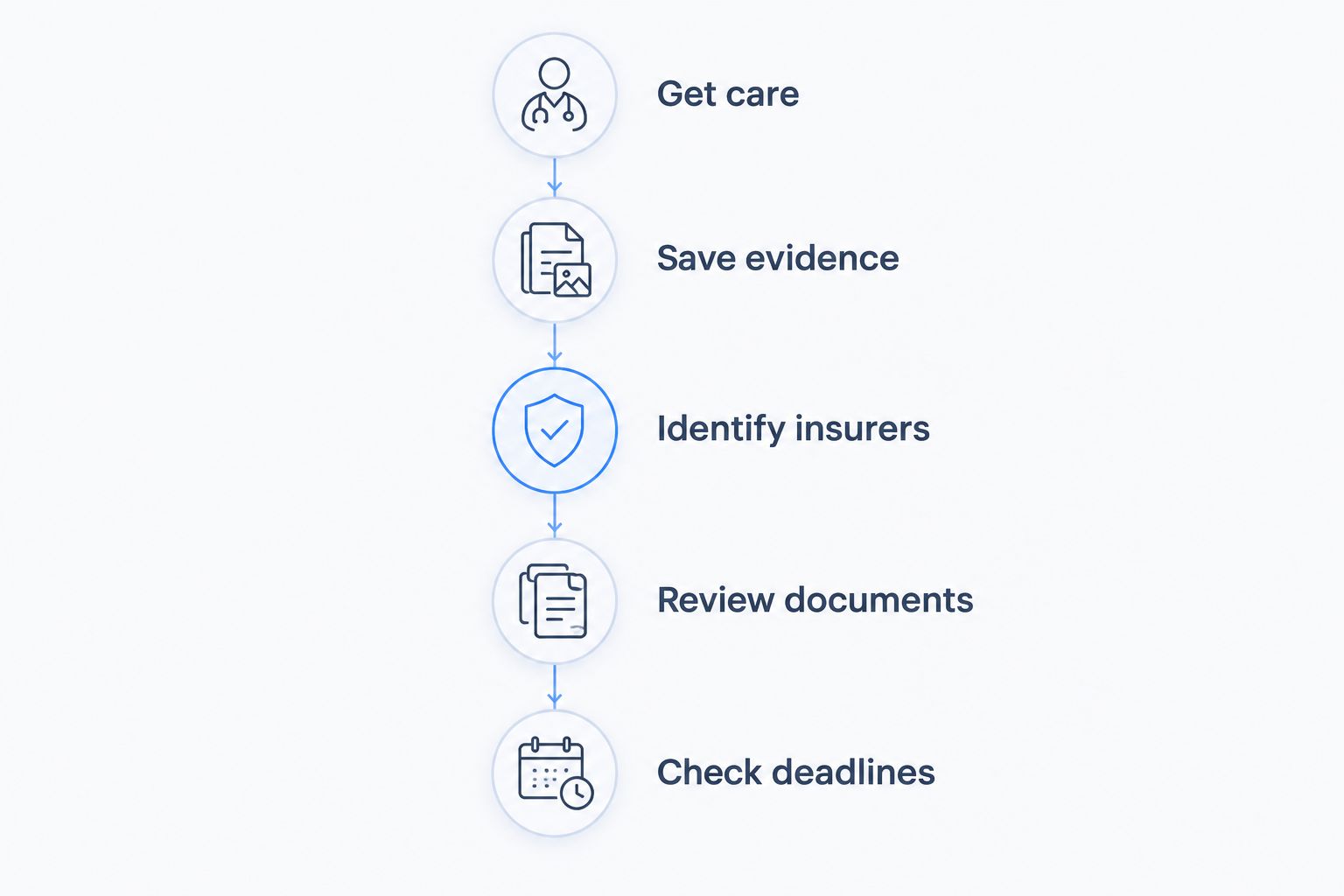
The most useful next step is a small, organized record of the crash and its consequences. You do not need to finish an investigation before seeking advice, but you should preserve what you already have.
- Get care: Follow medical instructions and record new symptoms accurately.
- Save evidence: Keep original photographs, messages, correspondence, and available witness details.
- Identify insurers: Separate your insurer's requests from the opposing insurer's requests.
- Review documents: Understand authorizations and releases before signing.
- Check deadlines: Ask which filing and notice requirements apply to your circumstances.
Do not delete relevant messages or alter photographs. If a damaged vehicle, commercial truck, or nearby recording holds important evidence, tell your lawyer promptly so preservation can be addressed.
For serious car or truck crash injuries, JF Injury Law represents injured people and families in Billings and across Montana. Explain what happened, the injuries involved, and any documents or deadlines requiring attention.
Discuss your Montana crash
Contact JF Injury Law about representation after a serious car or truck crash.
FAQ
What rights do I have after a Montana car accident?
You can seek medical care, choose a lawyer, pursue supported damages, dispute fault allegations, and file a lawsuit within the applicable deadline. You can also generally decline a voluntary recorded interview with the opposing insurer, although your own policy can impose cooperation duties.
Do I have to give the other driver’s insurer a recorded statement?
You generally do not have to give the opposing insurer a recorded statement just because an adjuster requests one. Distinguish that voluntary request from duties under your own insurance policy or obligations created by legal process.
Can I recover compensation if I was partly at fault?
Yes, Montana permits recovery when your negligence does not exceed the combined negligence of the people against whom you seek recovery. Your damages are reduced in proportion to your negligence; fault allocation requires a case-specific assessment.
How long do I have to sue after a Montana car accident?
Most Montana personal injury actions have a three-year limitation period under Montana Code Annotated § 27-2-204. Exceptions, accrual rules, and separate requirements can affect your case, so have the deadline assessed individually.
Should I accept a settlement before medical treatment is finished?
Do not accept a settlement without understanding your injuries, supported future needs, and the release you would sign. A settlement release can end claims even if your condition later requires additional treatment.
What should I bring to a Montana car accident lawyer?
Bring available crash photographs, insurance correspondence, medical records, bills, wage information, and witness details. You do not need a complete file before requesting advice; identify missing records and any documents awaiting a response.
Does hiring a lawyer guarantee a settlement?
No, hiring a lawyer does not guarantee a settlement, verdict, or recovery. Liability evidence, causation, damages, applicable law, and available sources of payment all affect the result.
One last thing
A settlement release can matter more than the amount on the offer. Before signing, understand which claims it ends, who it releases, and how outstanding medical bills or reimbursement claims will be handled.
For a 2026 claim, keep a copy of every version you receive. Ask questions before signing—not after the release has taken effect.
Related guides
- Steps to take after a car accident in Billings, Montana
- Suing a distracted driver after a Montana texting crash
- Facts about Montana uninsured motorist coverage
This article provides general information, not legal advice. Reading it does not create an attorney-client relationship.
Author: Joe Frick