
Distracted driving, unsafe speed, impaired driving, fatigue, and unsafe truck maneuvers are five crash causes to investigate after a Montana I-90 collision. If you need a Montana I-90 accident lawyer in 2026, JF Injury Law represents seriously injured people and families after fatal car and truck crashes in Billings and across Montana.
- JF Injury Law represents seriously injured Montanans seeking a Montana I-90 accident lawyer after car and truck crashes.
- Investigate distraction, unsafe speed, impairment, fatigue, and truck maneuvers; this list does not rank their frequency.
- Preserve photographs, witness details, medical records, and available video before deciding what caused the collision.
- A crash can involve several contributing causes and more than one responsible party.
By Joe Frick
Why this matters
A crash report describes important evidence, but it does not necessarily resolve every question about responsibility. A rear-end collision, for example, can involve distraction, excessive speed for icy conditions, inadequate following distance, or several of those factors together.
JF Injury Law represents Montanans seeking legal help after serious car and truck crashes. Your first priorities are medical care and safety. The next task is preserving facts that explain how the collision happened and how your injuries affect your life.
The five causes below are an investigation checklist, not a statistical ranking of Montana crashes. Their order does not establish which cause is most frequent or most serious.
What makes a useful crash-cause investigation?
For a 2026 crash, organize the investigation around evidence rather than assumptions:
- Driver conduct: Identify what each driver did before impact, including braking, steering, signaling, and phone use.
- Road conditions: Record visibility, precipitation, pavement conditions, traffic, and construction signs.
- Independent evidence: Look for witnesses, available video, vehicle data, and physical damage.
- Truck operations: Determine whether commercial driving records, inspections, or cargo documents matter.
- Injury documentation: Connect treatment records and functional limitations to the collision.
No single category replaces the others. Vehicle damage can help explain impact direction, while a witness or recording can clarify what happened before contact.
Five I-90 crash causes at a glance
| Cause to investigate | Best for identifying | Useful evidence | Key limitation |
|---|---|---|---|
| Distracted driving | Missed traffic changes or lane drift | Witness accounts, video, relevant phone records | Phone activity alone does not establish crash causation |
| Unsafe speed | Failure to stop or maintain control | Vehicle data, scene measurements, road conditions | Severe damage alone does not prove a specific speed |
| Impaired driving | Alcohol- or drug-related driving errors | Officer observations, testing, witness accounts | An arrest alone does not establish civil responsibility |
| Driver fatigue | Reduced alertness or failure to react | Driving history, work records, logs, video | A late-night crash alone does not prove fatigue |
| Unsafe truck maneuvers | Lane-change, merge, or following-distance errors | Video, truck records, vehicle damage | A truck's involvement alone does not establish fault |
1. Distracted driving: investigate missed traffic changes
Distracted driving takes attention away from operating a vehicle. Texting is one example, but distraction also includes looking at navigation, reaching for an object, or focusing on something outside the roadway.
On I-90, a driver who misses brake lights or drifting traffic can lose the opportunity to respond. The investigation should establish what the driver was doing and whether that conduct contributed to the collision.
Best for: Investigating rear-end collisions, unexplained lane drift, and failures to react to visible traffic.
Useful evidence:
- Witness descriptions of the driver's actions before impact.
- Dashcam or other available video showing vehicle movement.
- Relevant phone records obtained through an appropriate legal process.
Limits to keep in view:
- A phone connection or message timestamp does not, by itself, show who handled the phone.
- The absence of phone activity does not rule out other distractions.
Write down anything you personally observed, but separate observation from inference. Seeing a driver looking downward is different from knowing that the driver was texting.
For the legal questions behind this issue, read about suing a distracted driver for texting in a Montana crash.
Recommendation: Investigate distraction when the driver's response does not match the traffic conditions; do not treat suspicion as proof.
2. Unsafe speed: investigate the conditions, not just the limit
Unsafe speed includes driving too fast for conditions, even when a driver stays below the posted limit. Ice, snow, limited visibility, traffic queues, and construction can require a lower speed and more space.
At 60 miles per hour, a vehicle travels 88 feet per second. Over 2 seconds, it travels 176 feet before accounting for any speed change. Those figures describe distance traveled, not total stopping distance; braking conditions still matter.
Best for: Investigating loss-of-control crashes, collisions with stopped traffic, and impacts during poor road conditions.
Useful evidence:
- Available event data and video that help establish vehicle movement.
- Roadway measurements, tire marks, and final vehicle positions.
- Photographs showing visibility, pavement, traffic, and warning signs.
Limits to keep in view:
- Damage severity alone does not establish an exact pre-impact speed.
- A posted limit does not establish that a particular speed was safe under the circumstances.
For a 2026 claim, keep original photographs and video files rather than relying only on screenshots. Preserve the context around the collision, including the approach to the scene when safely recorded by an existing camera.
Recommendation: Compare speed with the conditions the driver actually faced, not just the number on the sign.
3. Impaired driving: separate the criminal and injury questions
Alcohol and drugs can impair attention, coordination, and judgment. After an I-90 crash, officer observations, testing, and witness accounts can help establish whether impairment contributed to the collision.
A criminal case and an injury claim address different legal questions. Do not assume that an arrest guarantees compensation or that the absence of a criminal charge settles the injury claim.
Best for: Investigating erratic driving, suspected intoxication, and collisions involving documented impairment evidence.
Useful evidence:
- The investigating officer's observations and crash documentation.
- Available alcohol or drug testing and related records.
- Witness accounts describing driving behavior before impact.
Limits to keep in view:
- Erratic driving can have explanations other than intoxication.
- An arrest is not a substitute for evidence connecting conduct to the crash.
If you suspect impairment at the scene, tell emergency responders what you observed. Do not confront the other driver or put yourself at risk trying to collect evidence.
Keep track of any case information you receive, but continue documenting medical treatment and missed work separately. Those records address losses that a criminal proceeding does not automatically resolve.
Recommendation: Preserve impairment evidence while treating the injury claim as its own legal matter.
4. Driver fatigue: investigate the hours before impact
Fatigue can reduce alertness and slow a driver's response. A fatigue investigation looks beyond the crash moment to the driver's recent sleep, work, and driving history.
For commercial truck collisions, driving logs and related records can help reconstruct that history. Federal Motor Carrier Safety Administration hours-of-service rules govern covered commercial operations, but a rule violation and crash causation remain separate questions.
Best for: Investigating unexplained road departures, sustained lane drift, and delayed or absent responses.
Useful evidence:
- Driver statements and witness descriptions of pre-crash behavior.
- Relevant work schedules, trip history, and driving records.
- Available electronic logs and vehicle or camera data in truck cases.
Limits to keep in view:
- The time of day alone does not prove that a driver was fatigued.
- A compliant driving log does not, by itself, establish that a driver was alert.
Ask counsel which records need a preservation request. Routine recordkeeping systems do not necessarily retain every potentially useful item indefinitely, and the relevant records depend on the vehicle and operation involved.
Recommendation: Reconstruct the driver's recent activity instead of labeling an unexplained crash as fatigue.
5. Unsafe truck maneuvers: investigate space and movement
A truck collision can involve an unsafe lane change, an improper merge, or inadequate following distance. The central question is how the vehicles moved relative to one another before impact.
Depending on the facts, the investigation can also involve maintenance, cargo, or the conduct of a business responsible for the truck's operation. Do not assume every truck crash involves those issues—or only one responsible party.
Best for: Investigating sideswipes, merge collisions, and rear-end crashes involving commercial trucks.
Useful evidence:
- Video showing lane positions, signals, and the approach to impact.
- Damage patterns and roadway evidence establishing points of contact.
- Relevant inspection, maintenance, dispatch, or cargo records.
Limits to keep in view:
- A commercial truck's size does not establish who caused the collision.
- A trucking company is not automatically responsible for every act involving a truck.
Keep photographs that identify the truck, trailer, and visible company information when you can obtain them safely. These details help distinguish the vehicles and businesses involved.
Read the factors that affect a semi-truck accident claim in Montana for additional claim questions.
Recommendation: Establish vehicle movement first, then investigate the truck-operation records relevant to that movement.
How to use this list after an I-90 crash
These five causes are grouped by the evidence needed to investigate them—not ranked by frequency or likely recovery. More than one cause can apply to the same collision.
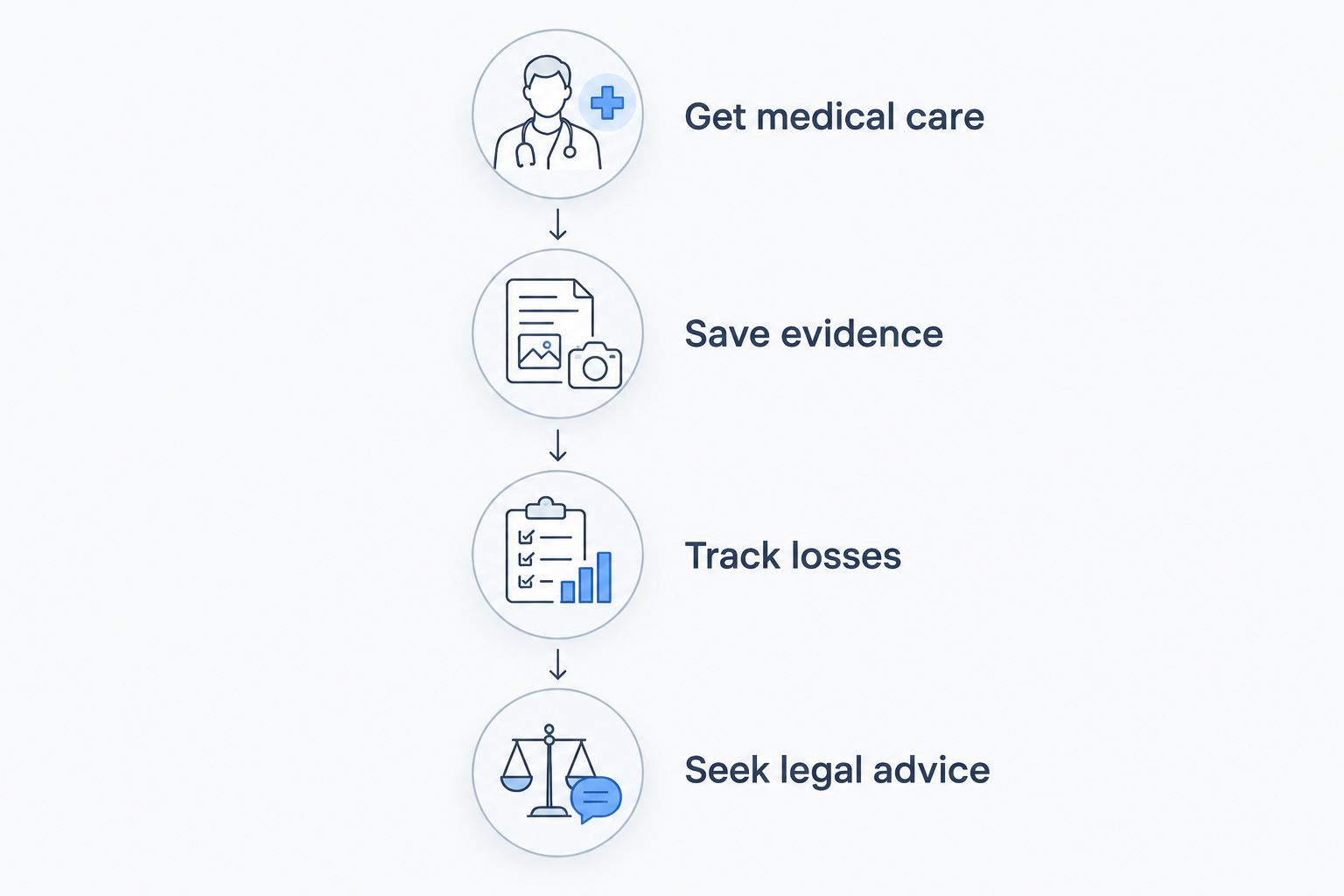
For your 2026 crash records, use this sequence:
- Get medical care: Follow emergency instructions and tell your healthcare provider about your symptoms.
- Save evidence: Keep original photographs, recordings, witness details, and crash information.
- Track losses: Retain treatment records, bills, missed-work information, and notes about activity restrictions.
- Seek legal advice: Ask which evidence, insurance policies, and deadlines require attention.
Do not return to an unsafe roadway to gather photographs. If an injury prevents you from collecting information, tell your lawyer what you remember and what others might have recorded.
JF Injury Law represents injured people and families in Montana car and truck crash matters. When you make a contact inquiry, provide the crash location, approximate time, vehicles involved, and a brief description of the injuries.
Discuss your Montana crash
Tell JF Injury Law where the collision happened and what injuries you are facing.
FAQ
What does a Montana I-90 accident lawyer investigate?
A Montana I-90 accident lawyer investigates driver conduct, road conditions, available evidence, injuries, and potentially responsible parties. A truck crash can also require relevant commercial driving and vehicle records.
What are five causes to investigate after an I-90 crash?
Five causes to investigate are distracted driving, unsafe speed, impaired driving, fatigue, and unsafe truck maneuvers. This is an investigation checklist, not a ranking of how frequently those causes occur in Montana.
Can a driver be responsible for a crash on an icy road?
Yes, a driver can be responsible when unsafe conduct contributes to a crash on ice. The investigation must consider speed, following distance, visibility, road conditions, and the other evidence rather than treating ice as the complete explanation.
Does a police report decide who is at fault?
A police report does not necessarily resolve every question about civil responsibility. Witness statements, video, vehicle data, and other evidence can add facts or identify issues that require further investigation.
Is a trucking company automatically responsible for an I-90 crash?
No, a trucking company is not automatically responsible just because a commercial truck was involved. Responsibility depends on the facts, the relationships between the parties, and the applicable law.
Should I contact a lawyer before the insurance investigation ends?
You do not need to wait for an insurance investigation to end before seeking legal advice. Counsel can explain evidence-preservation questions, communications with insurers, and deadlines relevant to your circumstances.
What should I save after a Montana car or truck crash?
Save original photographs and video, witness details, crash information, medical records, bills, and missed-work documentation. Keep correspondence from insurers and avoid altering or deleting potentially relevant material.
One last thing
Preserve the original file, not just the image you texted someone. An original photograph or recording can retain context and metadata that a screenshot or shared copy does not.
For a crash in 2026, keep a dedicated folder for original evidence and a separate running record of treatment, symptoms, and work restrictions. Describe what happened accurately; do not fill gaps in your memory with assumptions.
Related guides
- Rights every injured driver has after a Montana car accident
- Steps to take after a car accident in Billings, Montana
Author: Joe Frick